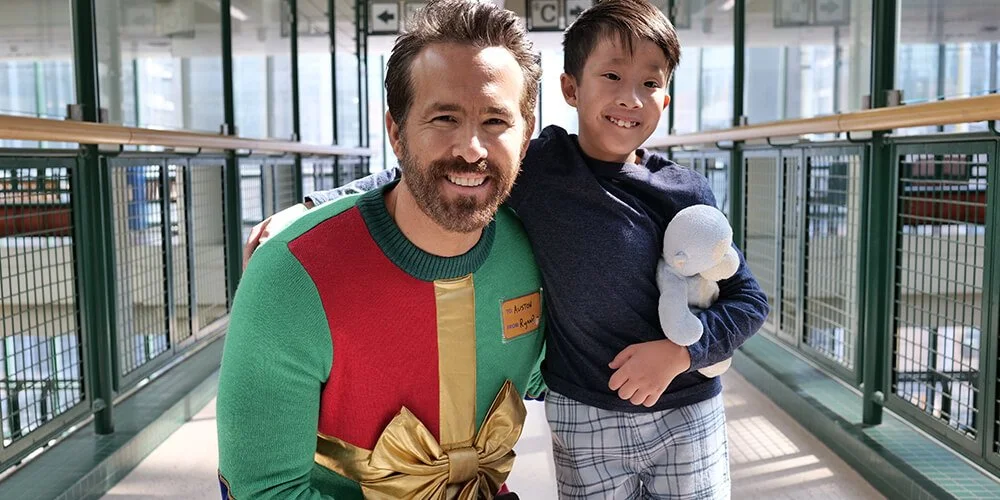
Brand Evolution and Architecture Concepts: Sick Kids Foundation (Part 1)
The one memory I have in my childhood with my parents and going to groceries is consistently saying, “Woah, they changed it!” while pointing at the Tropicana juice boxes and various cereal boxes.
Little did I know at the time, that branding and rebranding was my first area of marketing that was exposed to me at an early age. Those little experiences eventually became a key area of interest during my post-grad studies at George Brown College in Toronto. It also became the first lesson in understanding the art and science of branding and how it would help bridge my knowledge in examining other brands in the space.
SickKids Foundation and the Vs. campaign is one of the premier Canadian marketing case studies in brand evolution and rallying around a common cause.
The shift to bold and edgy-ness of the SickKids branding is one to continue keeping an eye out.
It’s fitting that in my previous and first post, I fan-boy’d over New Balance as they’ve succeeded in evolving their brand from ‘Dad Shoe’ to street culture cog and athleisure titan in recent years. Internationally, they’re certainly no slouch.
For some home bias Canadian content, the SickKids Foundation had underwent a successful evolution themselves in the mid 2010s and has now found themselves a brand darling north of the border.
We’ll use these two brands in a two part series for the purpose of this examination as the latter is a non-profit vs a traditional brand.
Tale of the Tape
SickKids Foundation
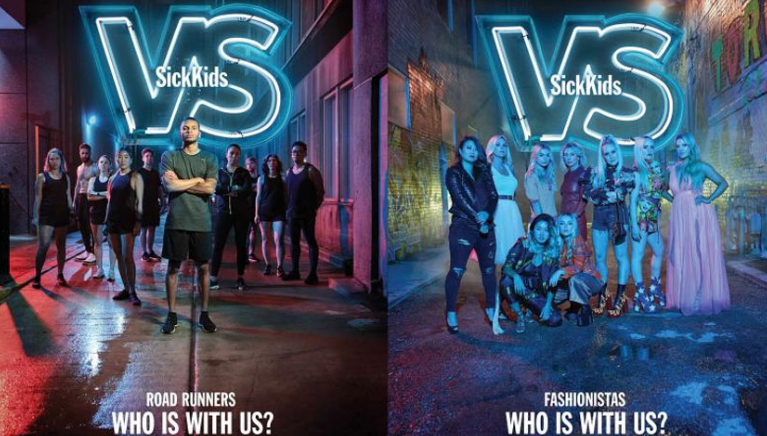
With charities generally having a tough time finding donors, SickKids came out with a bold statement nearly 10 years ago. Their campaign has continued to resonate and evolve while still being a best in-class example for non profit brand building in the space.
For those unaware of the SickKids Foundation, they are one of the largest charitable funders in child healthcare research, not just in Canada but in North America.
(Fun fact, I was a patient of Sick Kids Hospital in elementary school having done a surgery.)
Much has changed since then as they continued expanding their research and development but also their brand recognition and awareness.
The mid 2010s marked a turning point in their brand history to help elevate their fundraising awareness with the Vs. campaign. The industry watched as a Canadian darling evolved from not just a non profit and hospital but as a powerful brand with an engine capable of capturing attention. While non-profits generally are not risk takers and tend to stay a bit conservative, the team at Sick Kids Foundation dared to be different.
Differentiation from a brand standpoint in non-profits doesn’t quite exist. Thus, needing to separate themselves from the noise while also attracting a new audience is fairly new territory.
On the Vs. campaign:
“This is more than an advertising campaign. It’s baked into everything we do.”
What you’ll find is a brand’s promise and positioning generally will not change. It has to stay consistent in order to remain authentic and true to why they exist in the first place. Where it starts to get interesting is the personality and associations of the brand and a slight marginal change in perhaps the core target market in order to open up storytelling opportunities to a wider audience.
Brand Architecture & Analysis
Before we get into the analysis, let’s take a look at a “FROM” campaign to help set up our breakdown:
Without considering any biases to today’s modern creative, Together We Will feels inspirational and warm as those collaborative, inclusive and innovative traits comes through the creative. Those “traits” spell the exact values SickKids talks about on their website as well.
The promise of why SickKids exists also remains strong throughout the video and why the world will remain better with healthier children. Many of those voiceovers iterate the “we” theme and that “togetherness” feel with the goal of making the world a better place.
Architecturally, you can see that SickKids and their agency back in 2010 created a strong ad as those “RTBs” or brand personification comes out consistently from the beginning to end of the video.
From someone like myself who has 2 years under his belt working on the brand side and listening in on the discussions during our weekly Advertising Creative Review, I can say with confidence that this was a safe and solid creative.
Now, fast forward several years later, we now have the birth of Vs.
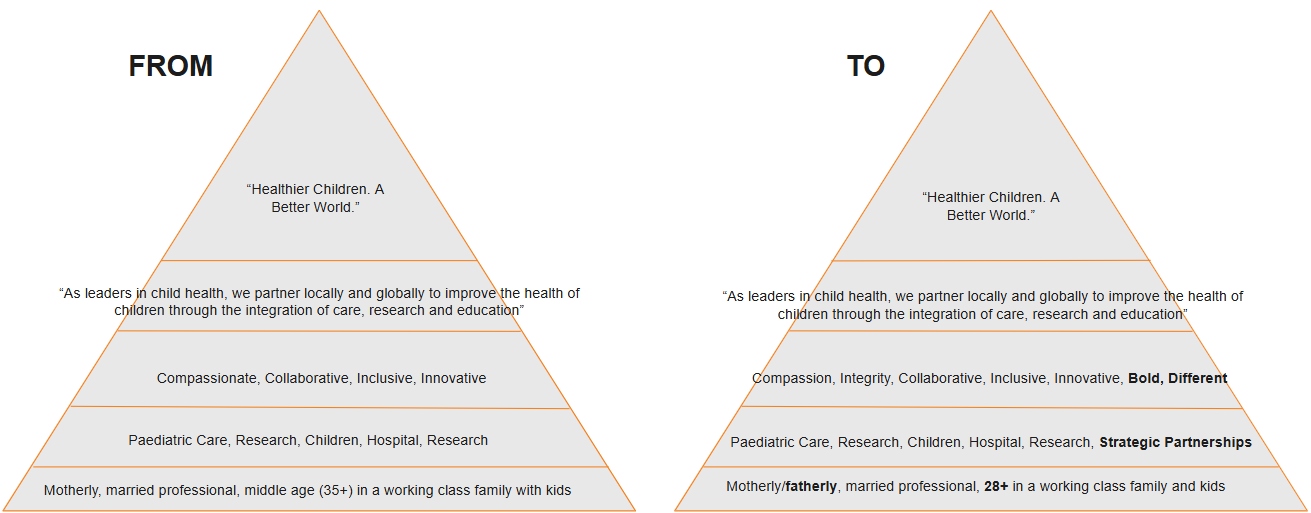
When breaking down the FROM and TO, you start to see those subtle differences in the evolution of the brand. Most notably, you start to see father or male figures in creative to encompass the entire family going through challenges together which is a subtle shift from mainly featured moms. This allows for incremental creative freedom with a slightly expanded audience that is already organic to the family ecosystem.
Thanks to the surgical approach of the Together We Will campaign, you now get an openness for newer creative feel but with the same goal in mind.
Kate Torrance, VP Brand, Content & Comms of Sick Kids was featured as a guest on the 4Ps in a Pod podcast, with hosts Jeevan Grewal & JP Del Carmen. Here’s an excerpt of what she had to say when asked about the brand transformation journey.
“You can’t expect transformational growth by telling the same group of people what they already know. You can take that and apply it to any brand, anywhere.
From that moment in time, it was like, “How can we pull ourselves away from the tropes of the category?”
And we landed on this sort of truth about Sick Kids which is while the foundation was a charity, the hospital was actually the epitome of a performance brand.
These are the best nurses, doctors, administrators, support staff, child life specialists in the country. Who get up every morning, coming to work with one mission: To help kids, to win battles, to make something better and that’s like the epitome of a performance brand.
So why are, if we as the Foundation, are a reflection of that institution, why are we acting like a poor charity that has to make you feel sorry for us and we’re weak and helpless, please give and the kids need you..
It was that sort of moment in time when we realized that we could lean into the fact that we are a performance brand.. ”
Torrance went on say that this helped unlock the brief for their agency, Cosette. This ultimately propelled them to see that Sick Kids could be like a sports team and use certain vernacular / devices for what eventually became not just a campaign, but an entire platform.
This podcast episode is probably one of my favourites as a marketer as the trio chat through stakeholder management as well. Torrance discusses that the campaign doesn’t go through if it wasn’t for the Family Advisors Network and Patients’ Council. Ultimately, socializing internally is a key component when moving forward with any campaign because everyone has to buy in. The Foundation is essentially selling the work, bringing everyone along for the ride of what actually happens behind-the-scenes plus it’s putting these families in the spotlight. It’s key that the creative has to respect the patients but also elevating them at the same time.
In the episode, she later talks about criticism and negativity in the community around the campaign however, families and patients came to defend the direction which again speaks to having proper stakeholder engagement and management.
What’s Next for the Sick Kids Foundation
It’s clear with economic headwinds around the country, wallets are much tighter and non profits have to get a little more creative.
For this particular segment, while the easy answer is to listen in on the episode and hear about Kate Torrance’s take on finding different stories that have yet to be told, my take is that the Sick Kids Foundation will look at gaming as a way to extend their reach. But, I also don’t believe it will just be the Sick Kids Foundation. I wholeheartedly believe that non profits alike will revisit this.
As Torrance had mentioned in the episode, it’s about broadening the overall pie and not looking at the rest of the non profits as competition. Gaming does just that as it’s not a “traditional” platform and it opens up reach that sees no borders.
Imagine a scenario where you have multiple groups of people with different life changing diseases all playing with each other and talking about the game their playing but also what treatment looks like? It’s a way for others to learn more about each other, connect with a new audience - not just your traditional streaming audience but others in the space as well.
The gaming industry has been ripe for some time now ever since the pandemic years and with news around the Olympic Esports Games, brands can have another look at the impact of an unfamiliar audience and how close knit and supportive the players really are.